

















 Shop
Shop

[3 Ways] Fix iPhone Won’t Go into DFU Mode in 5 Minutes!
Category: iPhone Issues

4 mins read
DFU mode is useful when an iPhone needs a deeper firmware restore, but it is also easy to get wrong. If your iPhone won't enter DFU mode during an iOS 27 update, restore, downgrade, or repair attempt, start by checking the button timing, cable, USB detection, and iOS state before moving to more serious recovery steps.

What is DFU mode?
The DFU mode, short for Device Firmware Update, is a special state that allows you to interact with your iPhone's firmware without loading the operating system.
As an advanced way compared to Recovery mode, it's used for tasks like restoring/updating/downgrading iOS system, troubleshooting serious software issues as well.

Quick answer
If your iPhone won't go into DFU mode, check the button sequence, cable, USB port, and timing first. If you cant enter DFU mode and iPhone DFU mode not working blocks an iOS 27 restore or downgrade, try recovery mode or a system repair workflow before repeating DFU attempts that never get detected.
In this article:

Why iPhone Won't Go into DFU Mode
When an iPhone won't go into DFU mode, the cause is usually one of five things: button timing, a bad USB connection, a damaged button, an iOS restore problem, or hardware failure.
- Jailbreak Attempts: A jailbroken iPhone may fail to enter DFU mode.
- iOS System Glitches: A failed update, restore loop, or firmware error can stop the iPhone from responding normally.
- Hardware Issues: Broken volume buttons, a damaged side button, charging-port trouble, or board damage can prevent DFU detection.
- Wrong Steps: DFU mode depends on exact timing. Holding or releasing one button too early can make the iPhone restart instead.

How to Put iPhone in DFU Mode Correctly
DFU mode uses a stricter button sequence than recovery mode, so timing errors are common. Before blaming the iPhone, repeat the steps slowly with a reliable USB cable and a computer that can detect the device.
Use the section that matches your iPhone model. If the screen never stays black or the computer never detects the iPhone, move to the repair options after the model-specific steps.
1 How to Put iPhone 8/X/11/12/13/14/15/16/17 in DFU Mode
- Step 1: Connect your iPhone to the computer with a USB cable.
- Step 2: Quickly press the Volume Up button and release it, then quickly press the Volume Down button and release it.
- Step 3: Press the Side button and don't release it. When the screen turns black, press the Volume Down button together with the Side button.
- Step 4: 5 seconds later, release the Side button, but you still need to hold the Volume Down button for at least 8 seconds.
- Step 5: When the iPhone screen goes black, it is in DFU mode successfully.

2 How to Put iPhone 7/7 Plus in DFU Mode
- Step 1: Connect your iPhone to the computer using a USB cable.
- Step 2: Hold down the Power button and the Volume Down button together for 5 seconds.
- Step 3: Release the Power button, but continue to press the Volume Down button for 10 seconds.
- Step 4: When the iPhone screen turns black, it goes into the DFU mode.

3 How to Put iPhone 6 or Earlier in DFU Mode
- Step 1: Plug your iPhone to the computer via a USB cable.
- Step 2: Press and hold the Power button for 3 seconds.
- Step 3: While still holding the button, press and hold the Home button for about 10 seconds.
- Step 4: Release the Power button but carry on holding the Home button for 5 seconds.

Open Finder, Apple Devices, or iTunes. If the iPhone screen stays black and the computer reports that it has detected a device in recovery mode, the iPhone has entered DFU mode.
If your iPhone still will not enter DFU mode after the correct steps, check the cable and buttons first, then try the repair options below.
Fix iPhone DFU Mode Not Working
1 Repair iOS Before Trying DFU Again
If the button timing is correct but the iPhone is not going into DFU mode, the problem may be the iOS restore state rather than the DFU steps. This is common after a failed iOS 27 update, restore, or downgrade attempt.
In that situation, iMyFone Fixppo gives you a guided repair path before you move to erase-based recovery or DFU restore. Back up first when possible, especially if the iPhone can still boot.

When Fixppo Helps with DFU Mode Problems:
- Guided Repair Path: Useful when DFU mode is blocked by a failed update, restore loop, Apple logo screen, or firmware error.
- Recovery Mode Option: Enter or exit recovery mode from the computer when DFU timing is not working.
- Computer-Based Workflow: Helps users who are uncomfortable choosing firmware or repeating DFU button timing manually.
- Restore Failure Support: Can help with failed DFU restore, recovery-mode loops, and iOS repair scenarios.
- Device Coverage: Supports many recent iPhone models and iOS versions, including iOS 27 scenarios.
- Clear Limits: Not a hardware fix for broken buttons, damaged ports, liquid damage, or a device that cannot be detected at all.
Use this path when DFU mode keeps failing after you have checked the button sequence, cable, and USB port.
Install Fixppo on your computer, connect the iPhone with a reliable USB cable, then choose a repair mode that matches the device state. Keep the iPhone connected until the repair process finishes.

Step 1: Choose Standard Mode when the iPhone is detected and the issue looks like an iOS software problem. Back up first if the device can still be accessed.

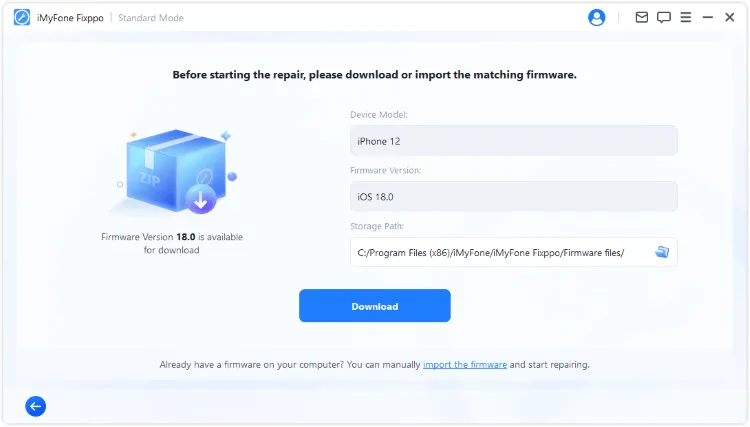
Step 2: Once the iPhone is connected, Fixppo will detect the device and show the available firmware. Click Download and wait for the firmware package to finish.
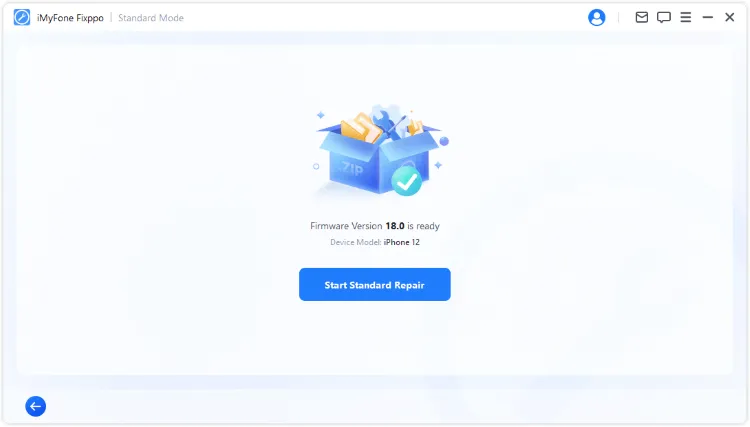
Step 3: After the firmware is ready, click Start Standard Repair. Keep the cable connected and do not interrupt the iPhone while the repair runs.
When the process is complete, the iPhone should restart. Test whether it can boot normally first, then try DFU mode again only if you still need a deeper restore.

2 Force Restart and Retry DFU
Force restart clears a stuck startup state before you try DFU again. It is especially useful when the iPhone is frozen, showing the Apple logo, or failing to respond after an update.
- Force restart iPhone 8/X/11/12/13/14/15/16/17: Press the Volume Up button and release. Do the same to the Volume Down button. Then Press and hold the Power button, release it until you see the Apple logo screen.
- Force restart iPhone 7/7 Plus: Press and hold the Volume Down button and the Power button together, release them when the Apple logo shows up.
- Force restart iPhone 6 and earlier: Press and hold the Home button and the Power button together, release them when the Apple logo displays on your iPhone.

After that, follow the steps again to put iPhone in DFU mode manually.
3 Update iOS or Use Recovery Mode Instead
If the iPhone can still boot, update iOS normally. If it cannot boot or the restore path is failing, recovery mode is usually easier to trigger than DFU and should be tried before deeper restore attempts.
- Step 1: Go to Settings - General - Software Update.
- Step 2: When a new iOS version is loaded, click on the Download and Install button to get it.
- Step 3: When your iPhone restarts after updating, follow the correct steps to put your iPhone into DFU mode again.

What If You Still Can't Enter DFU Mode?
If you only need to update or restore the iPhone, recovery mode may be enough. It is easier to trigger than DFU mode and is the better next step when DFU timing keeps failing.
Recovery mode is not identical to DFU mode, but for many update and restore cases it gives Finder, Apple Devices, or iTunes a way to reinstall iOS without using the stricter DFU sequence.
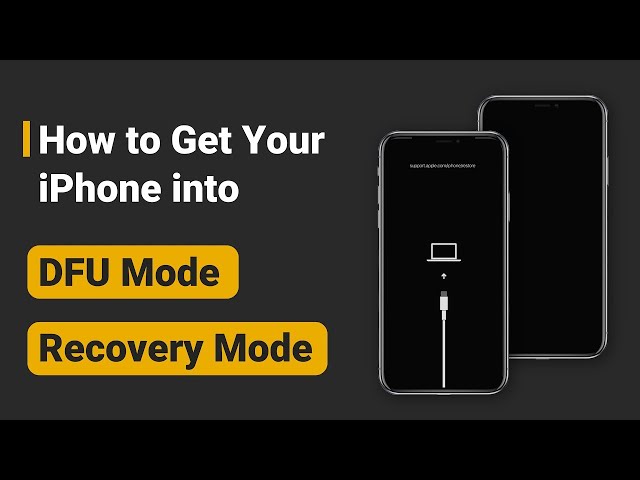
You can watch the video to put iPhone into recovery mode:
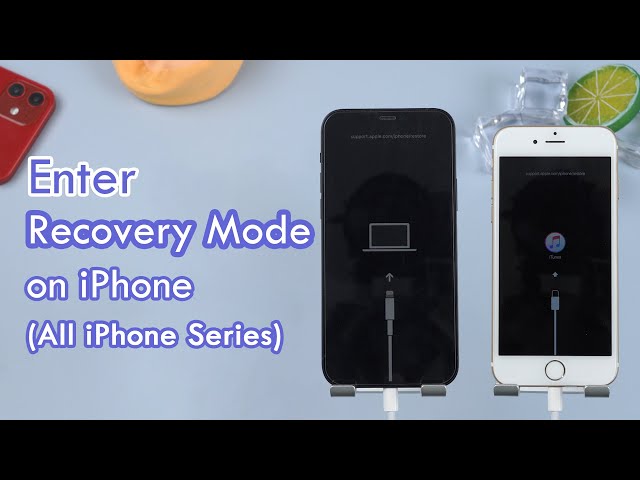
If the buttons make recovery mode difficult too, Fixppo can help enter recovery mode from the computer when the device is still detected.
Connect the iPhone, open the recovery-mode feature, and choose Enter. If the computer cannot detect the iPhone at all, check the cable, USB port, buttons, and possible hardware damage before continuing.

FAQs
Why won't my iPhone go into DFU mode?
Most failures come from timing, model-specific button steps, a bad cable, a USB recognition issue, or a damaged button. If all of those check out, the iOS restore state may be the problem.
Is DFU mode required to downgrade iOS 27?
Not always. Some downgrade or restore paths can use recovery mode or a guided repair workflow. DFU is a deeper option when normal restore paths fail.
What should I do if I can't enter DFU mode?
Try another cable and USB port, restart the computer, repeat the model-specific steps slowly, then use recovery mode or system repair if the phone still is not detected.
Conclusion
DFU mode should be a last deeper restore route, not the first thing to repeat endlessly. If correct timing, cable, and button checks do not work, move to recovery mode or a guided system repair path before assuming the iPhone is impossible to restore.
If manual DFU still fails after these checks, use a system repair path only when the iPhone is detected and the issue looks software-related. Hardware symptoms need service, not another DFU attempt.


(Click to rate this post)
Generally rated 4.9 (256 participated)

Rated successfully!

You have already rated this article, please do not repeat scoring!